How to Set Up a Catholic Home Altar: A Step-by-Step Guide

A Catholic home altar is a dedicated space in your home for prayer, meditation, and devotion. It’s an ancient tradition – the earliest Christians prayed at home altars long before churches were built – and it remains one of the best ways to keep your faith present in daily life.
Why Have a Home Altar?
- A visual reminder to pray – when you see your altar, you’re called to pause and connect with God
- A sacred space – set apart from the noise and distractions of daily life
- Family devotion – a natural gathering point for family prayers, especially the Rosary
- Liturgical connection – your altar can follow the seasons of the Church year
Choosing the Location
- A quiet corner of a living room, bedroom, or dedicated prayer room
- Away from distractions – not facing a TV or in a high-traffic area
- Well-lit – natural light or candle-friendly
- A small table, shelf, mantelpiece, or wall-mounted shelf all work perfectly
Essential Items for Your Home Altar
1. The Crucifix (Center)
The crucifix is the focal point. Place it at the center or hang it on the wall above. A sterling silver crucifix blessed by the Pope carries the apostolic blessing and special indulgences.
2. Candles
At least one candle – traditionally two flanking the crucifix. Light them during prayer to symbolize Christ as the Light of the World. Beeswax candles are traditional.
3. Religious Images or Statues
Images of the Blessed Virgin Mary (perhaps honoring the Miraculous Medal), your patron saint, or the Sacred Heart of Jesus.
4. Holy Water
Keep a small bottle of holy water on your altar. Use it to bless yourself before prayer, or sprinkle it in your home for protection.

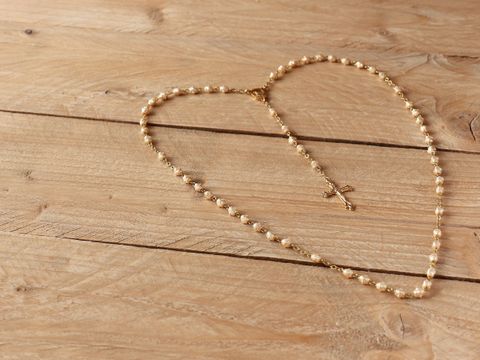
5. Your Rosary
Keep your rosary on or near the altar so it’s always ready for prayer.
6. A Bible or Prayer Book
Open to the daily readings or a favorite passage.
Optional Additions
- Relic medals – place near icons of the corresponding saint
- A Miraculous Medal – for Marian devotion
- Prayer cards – with specific prayers or novenas
- Fresh flowers – a beautiful offering, especially on feast days
- A small incense holder – for special occasions and liturgical seasons
Adapting Your Altar Through the Liturgical Year
- Advent – Add an Advent wreath with four candles, purple cloth
- Christmas – Add a nativity scene, white cloth, Christmas flowers
- Lent – Simplify the altar, add a purple cloth, perhaps a crown of thorns
- Easter – White cloth, flowers, add a Paschal candle or an "Alleluia" card
- Ordinary Time – Green cloth, rotate saint images based on feast days

Shop Holy Water | Shop Crucifixes | Shop Rosaries
Prayers to Say at Your Home Altar
Your home altar is not just a display. It is a place of encounter with the living God. Here are some of the most beloved prayers and devotions perfectly suited to home altar worship:
The Daily Rosary
The Rosary is perhaps the single most powerful prayer you can pray at your home altar. Praying all five decades takes about 20 minutes and draws you into meditation on the mysteries of Christ's life. Keep your blessed rosary draped over your crucifix or in a special place on your altar so it is always ready. Pope Leo XIII, for whom our current Pope Leo XIV is named, called the Rosary the most beautiful and the most rich in graces of all prayers.
Morning Offering
Begin each day at your altar with a simple Morning Offering: O Jesus, through the Immaculate Heart of Mary, I offer You my prayers, works, joys, and sufferings of this day for all the intentions of Your Sacred Heart. This prayer, recommended by the Apostleship of Prayer, consecrates your entire day to God and takes less than a minute.
The Angelus
Traditionally prayed three times daily (6 AM, noon, and 6 PM), the Angelus is a beautiful prayer commemorating the Incarnation. When you hear church bells — or simply set a reminder on your phone — step to your altar and pray: The Angel of the Lord declared unto Mary, and she conceived by the Holy Spirit... This ancient practice connects you to Catholics around the world praying the same words at the same hours.
The Liturgy of the Hours
Also known as the Divine Office, this is the official prayer of the Church, prayed by priests, religious, and an increasing number of laypeople. Morning Prayer (Lauds) and Evening Prayer (Vespers) are especially suited to home altar devotion. Free apps and websites make it easy to follow along, and your home altar provides the perfect sacred space for this practice that the Catechism describes as extending the praise offered at Mass to every hour of the day (CCC 1174).
Lectio Divina
This ancient practice of sacred reading involves slowly reading a passage of Scripture, meditating on it, praying in response, and resting in God's presence. Sit before your altar with your Bible open, a candle lit, and allow the Word of God to speak directly to your heart. Many Catholics find that 15 to 20 minutes of lectio divina at their home altar changes the tone of their entire day.
Involving Children in Home Altar Devotion
A home altar is one of the most effective ways to pass the faith on to your children. The Catechism teaches that parents are the first heralds of the faith for their children (CCC 1656), and a home altar makes that mission tangible and daily.
Make It Their Space Too
Let children help set up and care for the altar. Even toddlers can place a flower, light a (supervised) candle, or kiss a holy image. As children grow, give them age-appropriate responsibilities: an older child might read the daily Gospel passage, while a younger one can lead a decade of the Rosary. When children have ownership of the prayer space, they develop a personal relationship with it.
Age-Appropriate Devotions
- Ages 2 to 5: Simple prayers (Our Father, Hail Mary, Guardian Angel prayer), kissing icons, learning to make the Sign of the Cross with holy water
- Ages 6 to 9: One decade of the Rosary, short Scripture readings, saint feast day celebrations, learning about the Miraculous Medal
- Ages 10 to 13: Full Rosary, lectio divina, journaling prayers, leading family prayer time
- Teens: Liturgy of the Hours, personal devotional time, choosing their own patron saint image for the altar
Feast Day Traditions
Use your home altar as the center of liturgical celebrations throughout the year. On your children's patron saints' feast days, place that saint's image prominently on the altar, read their story together, and perhaps bake a special treat. These small traditions create lasting memories that anchor faith in joy rather than obligation.
How to Maintain and Care for Blessed Items
The items on your home altar — especially those that have been blessed — deserve reverent care. Here is how to keep your sacred items in beautiful condition:
Crucifixes and Medals
Dust regularly with a soft, dry cloth. For sterling silver items, use a dedicated silver polishing cloth to prevent tarnish. Avoid harsh chemical cleaners, which can damage finishes and patinas. Store items you are rotating out in a clean, dry place — never in a drawer with ordinary household items.
Holy Water
Replace your holy water periodically, especially if you use it daily for blessings. If holy water runs low, you may add regular water to blessed water and it retains its blessing (a longstanding practice in Church tradition). However, if the water becomes stale or discolored, dispose of it reverently by pouring it into the ground (not down a drain) and refill with fresh blessed water.
Candles and Linens
Trim candle wicks to about 6mm before each lighting to prevent smoking and dripping. If using an altar cloth, launder it gently and iron it — a clean, pressed cloth shows reverence for the sacred space. Beeswax candles, while more expensive, burn cleaner and are the traditional choice for Catholic worship.
Disposing of Damaged Blessed Items
Catholic tradition teaches that blessed items that are damaged beyond use should be burned or buried, not thrown in the trash. This applies to worn rosaries, broken crucifixes, torn holy cards, and dried palms. If you are unsure, bring damaged blessed items to your parish — most have a designated place for them.
Home Altar Traditions from Around the Catholic World
The practice of maintaining a sacred space at home is universal in Catholicism, but it takes beautifully diverse forms across cultures. Drawing inspiration from these traditions can enrich your own home altar practice:
Mexican Altarcito
In Mexico, the home altar (altarcito) is often vibrant and colorful, featuring images of Our Lady of Guadalupe, marigolds, papel picado (perforated paper), and family photos of deceased loved ones. During Dia de los Muertos, the altar becomes a central gathering place for remembering and praying for those who have passed. This tradition beautifully reflects the Catholic belief in the communion of saints (CCC 962).
Filipino Altar
In Filipino Catholic homes, the altar typically occupies a prominent place in the main living area. It often features the Santo Nino (Holy Child Jesus), a crucifix, images of the Sacred Heart and the Blessed Virgin, and fresh sampaguita flowers. During the nine-day Simbang Gabi novena before Christmas, Filipino families gather at their home altar when they cannot attend the predawn Mass.
Italian Angolo di Preghiera
In Italy — particularly in southern regions — nearly every home has a prayer corner. It typically features a crucifix, an image of the local patron saint, an oil lamp or votive candle, and often a small bottle of holy water from a local shrine or from Rome itself. Many Italian families maintain the tradition of gathering at the home altar to pray the Rosary together in the evening, especially during May (the month of Mary) and October (the month of the Rosary).
Polish Home Altar
Polish Catholics often center their home altar around an image of the Black Madonna of Czestochowa. The altar may include blessed palms from Palm Sunday, an oplatek (Christmas wafer) during the Advent season, and blessed herbs from the Feast of the Assumption. These cultural touches make the altar a living expression of both faith and heritage.
A Simple Daily Prayer Routine at Your Home Altar
If you are just beginning to pray at your home altar, start with a simple, sustainable routine. Consistency matters more than length. Here is a suggested daily rhythm that takes about 25 to 30 minutes total:
Morning (10 to 15 minutes)
- Light a candle and make the Sign of the Cross with holy water
- Pray the Morning Offering
- Read the daily Gospel (available online at USCCB Daily Readings)
- Spend 2 to 3 minutes in silent reflection
- Pray one decade of the Rosary
- Close with a personal intention and the Sign of the Cross
Evening (10 to 15 minutes)
- Light your candle
- Pray the Examen (a brief review of your day, asking: Where did I encounter God today? Where did I fall short?)
- Pray the remaining four decades of the Rosary (or one decade if time is short)
- Offer any concerns or gratitude to God in your own words
- Close with a prayer to your patron saint and your Guardian Angel
As this rhythm becomes natural, you may find yourself drawn to spend more time at your altar — adding novenas, lectio divina, or simply sitting in silence before the crucifix. The beauty of a home altar is that it meets you where you are. There is no wrong way to pray, as long as your heart is turned toward God.